• Skip to primary navigation
  • Skip to main content
Teledermatology
Patient Portal
| My Account

Epiphany Dermatology

Book
Locations Book Appt
  • Store
  • About Us
    • Mission
    • Physicians
    • Nurse Practitioners & Physician Assistants
    • Aestheticians
    • Leadership
  • Services
    • General Dermatology
    • Cancer Care
    • Cosmetic Dermatology
  • Join
    • Overview
    • Partnering
    • Physician Jobs
    • NP & PA Jobs
    • Learn Derm Program
    • Support Jobs
    • MA Gap Year Program
  • Resources
    • Pay My Bill
    • Patient Forms
    • Patient Portal
    • FAQs
    • Blog
  • Patient Portal
  • My Account
Locations Book Appt
  • All Categories
  • Acne
  • Anti-Aging
  • Cosmetic Dermatology
  • Medical Dermatology
  • Men's Health
  • Questions & Answers
  • Services
  • Skin Cancer
  • Skin Care
  • Skin Problems

Poison Ivy

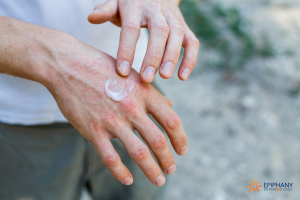
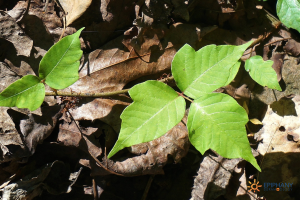
poison ivy Poison ivy refers to a class of plants that produce urushiol, an oil known to cause an allergic reaction. While not everyone is allergic to this oil, some people are highly allergic to urushiol and develop a contact rash when they’re exposed to it. Poison ivy plants have a grouping of three leaves (hence the saying, “Leaves of three, leave them be!”). Yet, this oil also exists on poison oak and poison sumac, which vary in appearance. While avoidi...

Read more about Poison Ivy

Cold Sores (Herpes Simplex)

cold sores herpes simplex What is a Cold Sore? A cold sore is a viral infection, usually caused by the herpes simplex virus 1 (HSV-1). A patient’s first outbreak after contracting the virus typically produces blisters, erosions or painful sores all around and inside the mouth. Later outbreaks of the herpes simplex virus typically produce blisters or sores in one isolated area — either around the lips or inside the mouth. These sores seem to appear with increased stress or a...

Read more about Cold Sores (Herpes Simplex)

Pediatric Dermatology

pediatric dermatology While general dermatologists have experience and training in a range of pediatric dermatological conditions, they may refer young patients to a pediatric dermatologist for evaluation and treatment of rare, genetic, or severe conditions or those unresponsive to current therapies. A pediatric dermatologist specializes in evaluating and treating skin disorders in infants, children, and teenagers. Beyond their education in general dermatology, pediatric de...

Read more about Pediatric Dermatology

What Age Should I Take My Children to the Dermatologist?

Dermatology for children Parenting is an endless journey of deciding what time is the right time to do what – and skincare is no different.  For most parents, three primary questions come to mind when they start thinking about their child’s skincare:  How soon should I bring my child to the dermatologist?  What skin problems are they susceptible to and when do I need to be on the lookout for those issues?  Is skin cancer in kids something I need to worry about?  As ...

Read more about What Age Should I Take My Children to the Dermatologist?

The Simple Guide to Actinic Keratoses

Actinic Keratosis Have you noticed a pink, scaly spot on your skin that never seems to go away?  If so, it’s time to visit your dermatologist, as you could be experiencing the first signs of actinic keratoses. Although it’s not dangerous on its own, it’s a warning sign of the potential for skin cancer in the future. Actinic keratoses are one of the most common issues we see in the dermatology clinics. It’s evidence that the skin has had too much sun exposure. B...

Read more about The Simple Guide to Actinic Keratoses

What are Sunspots and How Do I Prevent Them?

Sun spots You’ve been covering up that flat, brown spot on your face for a while now, but will it ever go away? Is it a sunspot or is it something worse?  Many people start to notice darker spots develop on their skin as they age. While some of these spots are a natural part of aging, other spots could be precancerous. If you’ve noticed dark spots surfacing on your face, chest, and arms, you may be dealing with sunspots.  What Are Sunspots?  “Sunspot”...

Read more about What are Sunspots and How Do I Prevent Them?

Nail Surgery

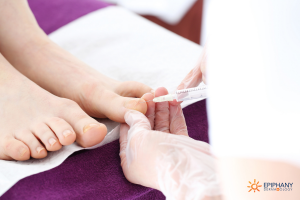
Nail Surgery Nail surgery is a way to remove a portion of the nail or an entire nail due to a disorder, deformity, or fungus. Nail surgery isn’t typically the first line of treatment for nail problems, but ingrown nail surgery or nail surgery to remove an extremely thick fungus may be the best option after consultation. Often, podiatrists conduct an ingrown toenail nail surgery for their patients after other nail grooming methods prove inefficient. For example, a...

Read more about Nail Surgery

Shingles

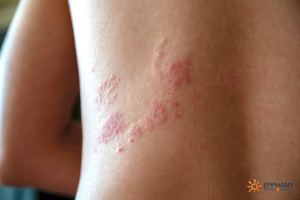
Shingles Shingles is a manifestation of the varicella-zoster virus — the same virus that causes chickenpox. While chickenpox is usually isolated to young children, shingles typically happens to people over age 50. When the herpes zoster virus is triggered by a stressful event, shingles begins as a painful, itchy sensation in the skin followed by a blistery, fluid-filled rash isolated to one side of the body. What are the Symptoms of Shingles? The herpes zoste...

Read more about Shingles

Photoaging: How to Treat and Preserve Healthier, Younger Looking Skin

Photoaging Wrinkles. Sunspots. Sun damaged skin. If you’ve thought about these skin issues (and how to prevent them), than you’ve thought about photoaging.  Many people are concerned with photoaging skin before they even know what it means. In fact, 30-40% of our patients come in to talk to us about photoaging – they just talk about it different terms: How should I be taking care of my skin?  How do I prevent or treat wrinkles and age spots?  How do I ma...

Read more about Photoaging: How to Treat and Preserve Healthier, Younger Looking Skin

Excisions

excisions A skin excision is a surgery where we cut out damaged skin tissue. It is a full thickness removal — meaning we remove all layers of the tissue (epidermis, dermis, and into the subcutaneous fat layer). We then suture it back together with stitches for optimal healing. What Types of Skin Problems Require an Excision? Excisions can be done on malignant tumors or benign lesions. For example, we can excise a benign sebaceous cyst that may be painful, enl...

Read more about Excisions
  • « Go to Previous Page
  • Page 1
  • Interim pages omitted …
  • Page 8
  • Page 9
  • Page 10
  • Page 11
  • Page 12
  • Interim pages omitted …
  • Page 31
  • Go to Next Page »
Quick Links
  • Locations
  • Book Appointment
  • Patient Portal
  • Shop
  • Services
  • Patient Forms
  • Epiphany Glow Cosmetic Points
About
  • Mission
  • Physicians
  • Nurse Practitioners & Physician Assistants
  • Aestheticians
  • Leadership
Join
  • Overview
  • Partnering
  • Physician Jobs
  • NP & PA Jobs
  • Support Jobs
Resources
  • Bill Pay Options
  • Patient Portal
  • Patient Forms
  • FAQ
  • Blog
contact
  • (855) 300-8510
  • Locations
  • Email Us
Follow Us
  • Facebook
  • Instagram
  • LinkedIn
Visit the Patient Portal or download the APPatient App for 24/7 Self-Service
google play app store

©2016-2026 Epiphany Dermatology™. All Rights Reserved.
Website by Widely Interactive.
Language Availability
  • Arizona
  • Colorado
  • Georgia
  • Hawaii
  • Iowa
  • Kansas
  • Maryland
  • Minnesota
  • Missouri
  • Montana
  • Nevada
  • New Jersey
  • New Mexico
  • Oklahoma
  • Oregon
  • South Carolina
  • Texas
  • Utah
  • Virginia
  • Washington
  • Wyoming
Notice of Privacy Practices Notice of Nondiscrimination Compliance Hotline Privacy Policy